Follow this blog
Blog Roll
Archive
Search this blog
Follow me
Memberships and Accolades

Wedding Galleries
Wedding Venues
« 'Two View' Wedding Photography at Bovey Castle | Main | Are you missing the point of Reportage? | Part Two »

What’s in the kit bag and why? | Part Three

Before I go into the equipment I use during commissions, I would like to stress that the creation of a good photograph, on the whole, has very little to do with the equipment that is used. Many photographers and enthusiasts get completely held up on equipment, commonly known as ‘gear lust’, which sees them buy just about whatever their favourite camera manufacturer makes.

This regular switching can be quite detrimental to a photographer's development; not only in terms of their portfolio but financially too, continually believing that the more expensive or 'professional' the camera and lens, the better the image. Instead, the camera and lens are merely a tool to serve the artist – as I mentioned in part two.

The amount of weddings I attend where the guests are using cameras two and half times the size of mine, plus a ‘rocket launcher’ lens, is scary. Quite funny too, until I get the bride phoning me up because she has seen the poor quality photography, probably on Facebook, that these amateurs produce and I then have to reassure her that my photography will be in a different league.

There's an old saying that only amateurs can afford professional kit. Well, I'll give you one piece of advice that I rarely see on the blogs or forums and might just save you a penny or two:

Get ONE camera and ONE prime lens. Buy nothing else until you are so familiar with them that, even without the camera to your eye, you start to see the world in a series of 35mm/50mm images (or whatever focal length you invest in).

This industry is simply full of too many ex IT professionals obsessed with these tiny little computer thingies that make images. The photographer's ability, or opinion and stance on image making, is an absolute priority and should not be underestimated. If you don't know how to practice your craft, or haven't spent the time learning what makes a good photograph and applying your own unique style, no amount of kit is going to help you.

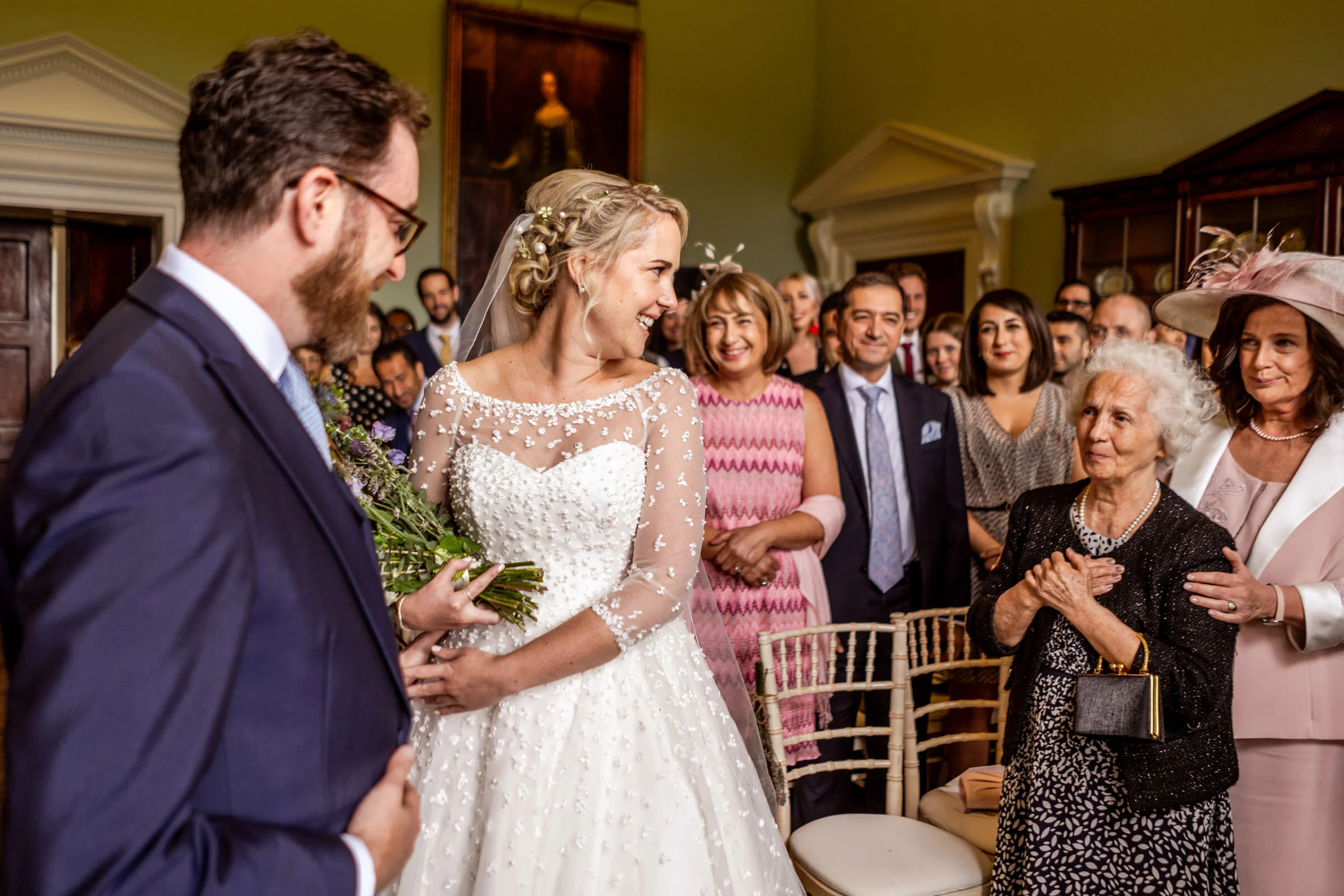
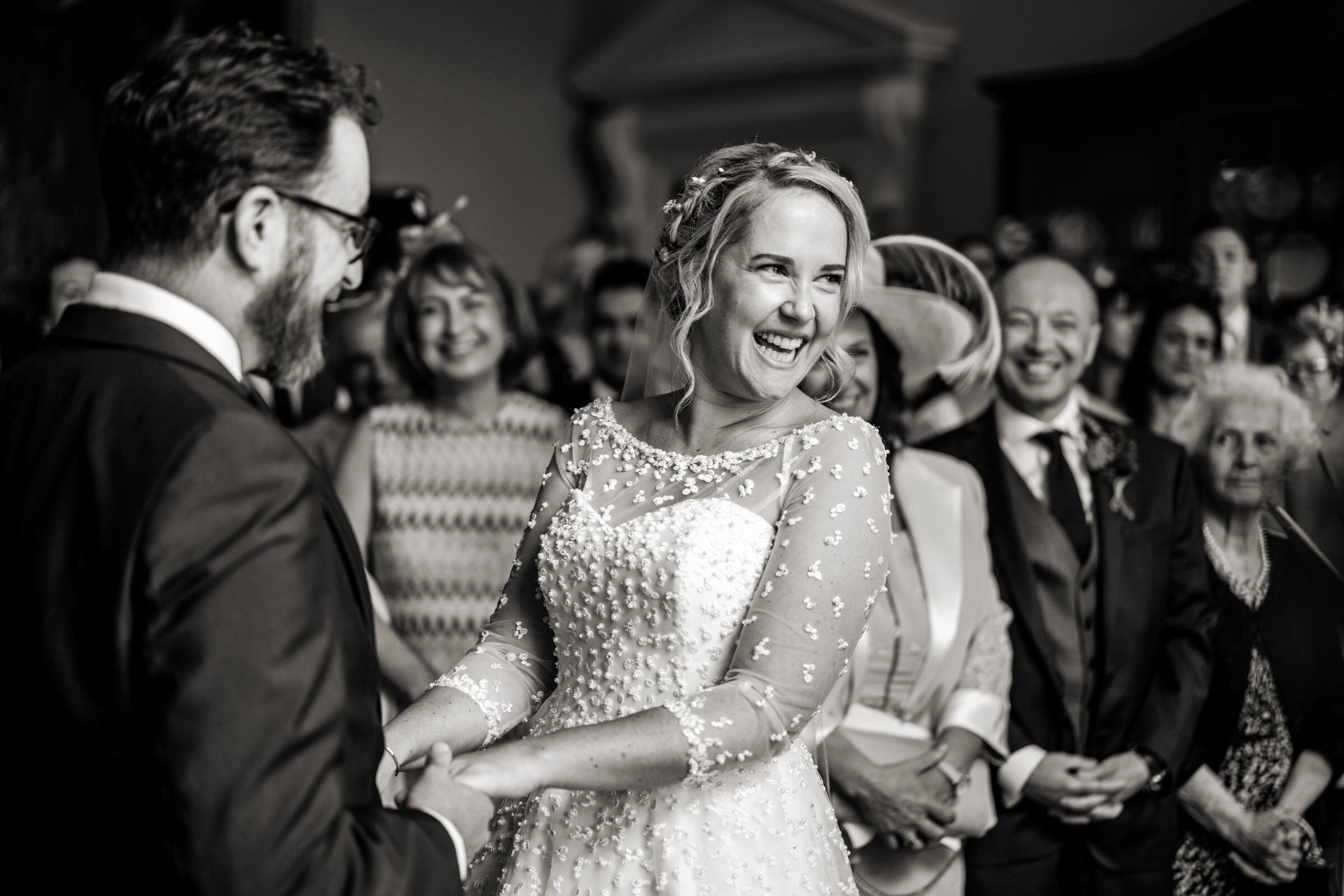
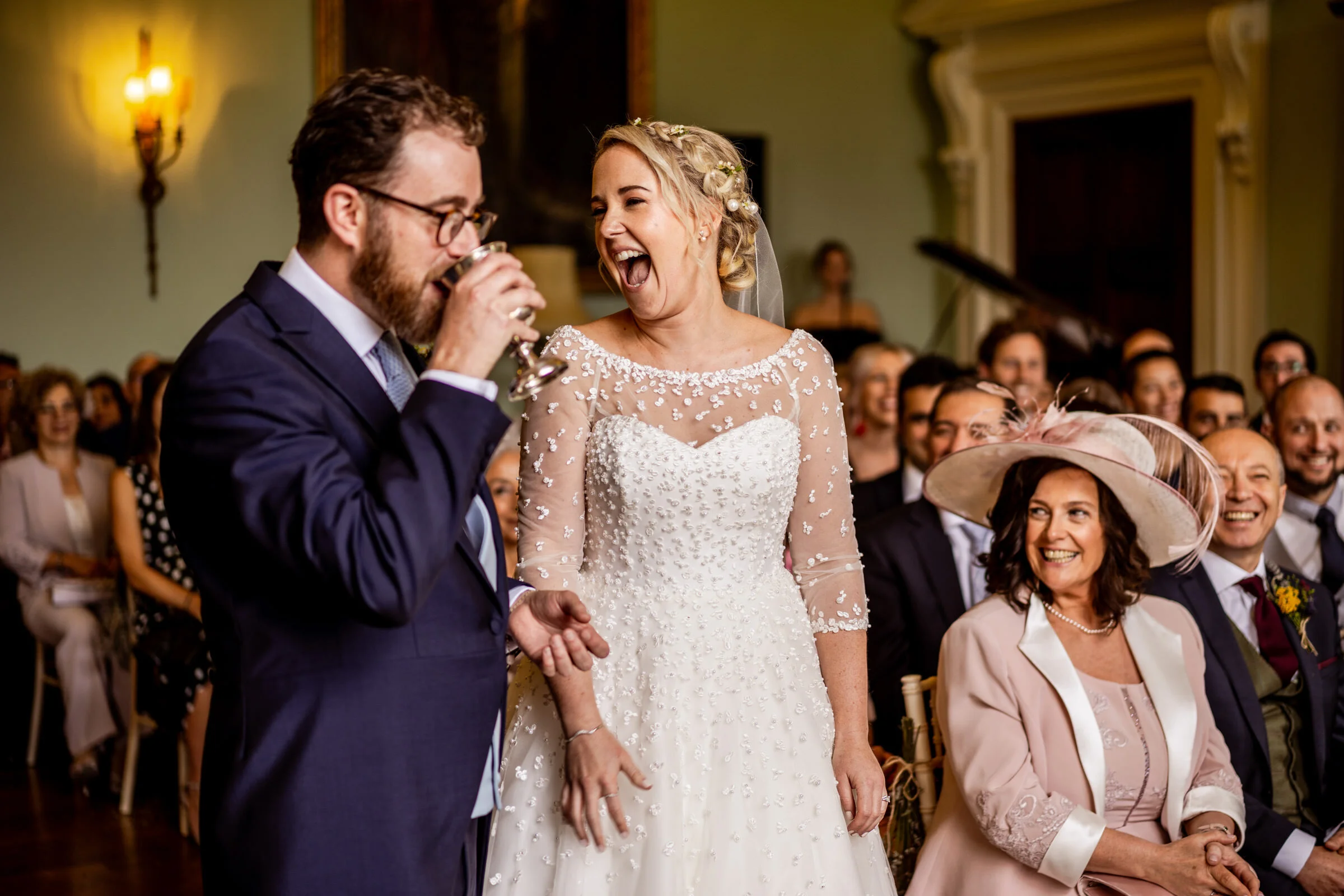
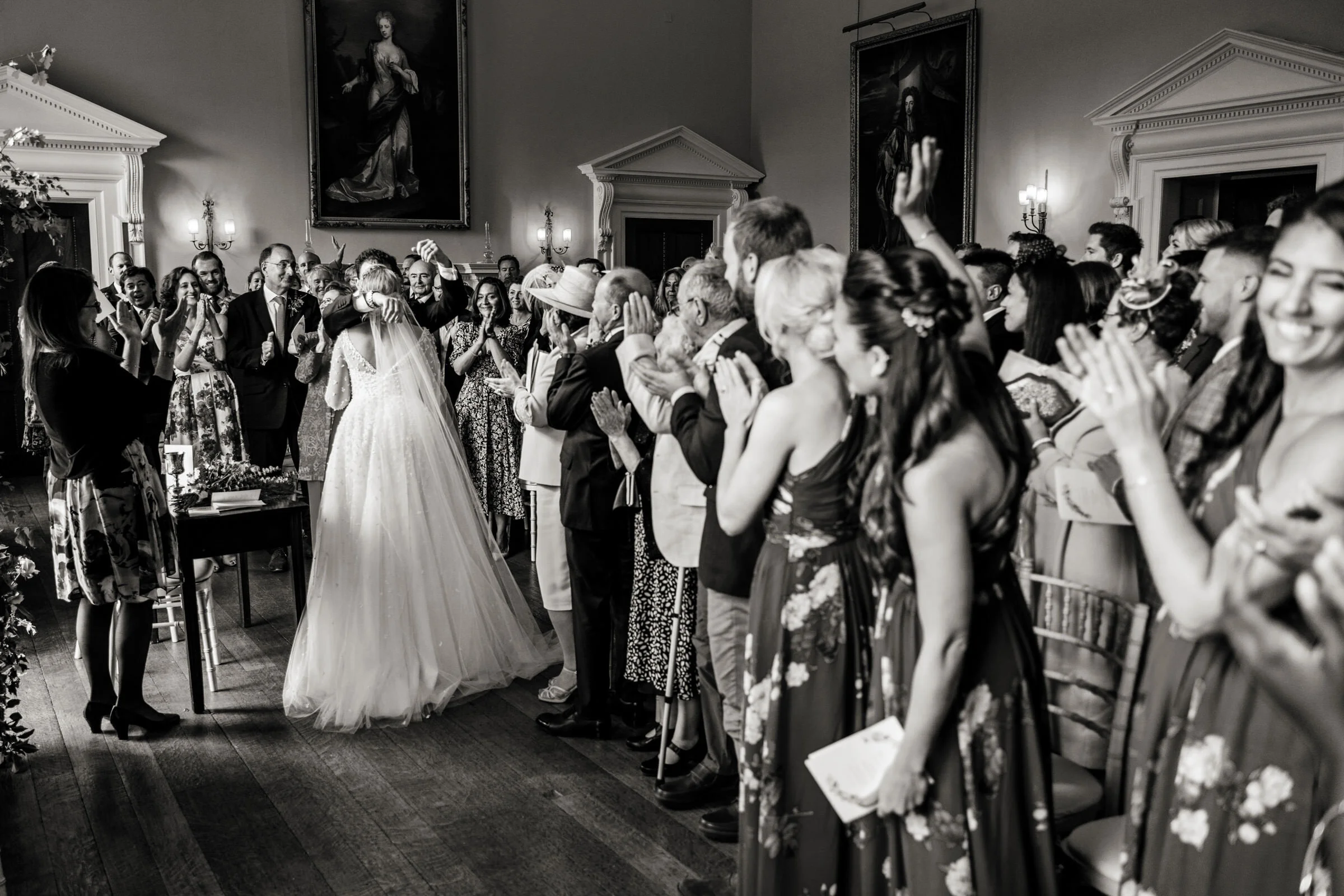
As mentioned in previous posts I am asked during a wedding, on a flatteringly frequent number of occasions, how I know the bride and groom. This is perfect. Being ‘accepted’ at a wedding is key to creating highly personal photography for your clients. I choose to shoot with small cameras and small, prime lenses and this is mostly so I can blend in with the wedding guests. These are the tools that suit the task I am performing (other photographers may vary) but they don't form the foundation of my ability.

I can, and have often, used different types of kit and equipment but still produced images that are unique to my style and approach. By being very ‘non-wedding photographer’ I can get in very close without making people feel awkward, to capture those incredibly unique images. For instance, one thing I like to do is shoot from people’s perspectives – over shoulders or close in and along a sight line perhaps – which gives the image an additional layer of interpretation. I’m not sure I could achieve this with a big 70-200 telephoto zoom.

I believe many zoom-based photographers, certainly not all, but the majority, get lazy and fail to maintain the discipline needed to establish and hold on to a rapport with their subjects. It’s easy to stand at a distance to get shots but the issue is that you become detached from the wedding and then, when you do actually need to move in closer for an image, your failure to maintain rapport prevents you from getting a convincing and quality reportage image. Essentially you’re not accepted as part of the wedding and remain to be seen as a ‘supplier’.

Seriously, it's easy to lambast these lenses because they are probably the most popular lenses in the wedding industry. They are mostly exceptional in terms of optics and build quality and in the right hands they can be used to capture some stunning imagery – including reportage wedding photography. However, because they encourage laziness they’re probably the single biggest contribution to ‘snapshot wedding photography’; the industry’s vast quantities of isolated head shots devoid of any narrative or soul. People need to simplify their set up. I know many a wedding photographer that has a kit bag, and car boot, full of ‘just in case’ equipment; lenses covering every mm from 16 through to 200. I'll be bold here and say this is simply unnecessary and actually clouds the whole point of what it is to be a reportage photographer; simple storytelling. By simplifying your kit you take this unwanted emphasis away from the equipment and place it exactly where it should be, on producing exceptional images.

During a typical commission I use a 50mm and a 24mm. Over time I have mastered these single focal distances and perspectives to the point where I can see the image without lifting the viewfinder to my eye. I’m not constantly walking back and fourth either, which I get asked frequently by photographers considering a switch to primes. Instead, because I’m completely tuned into the event, as apposed to standing on the sidelines picking people off with a telephoto, I can predict when things are going to happen, when the ‘decisive moment’ will occur and ultimately when to create the best, most thought provoking and inspiring photograph for my customers. For reference, Part Two of this series features 31 images and of this 31, 17 were taken with the 50mm lens and 14 with the 24mm.

The two Nikon D700 cameras that I’ve been using for the best part of a year have been, on the whole, pretty faultless. I’ve dropped them, kicked them, used them at their absolute maximum capabilities and they’ve still produced the goods. To my amazement, I produced a shot at 12,800 ISO during a winter wedding and in the final cut it sat side by side with 1600 ISO images, with no significantly noticeable differences. I couldn’t have dreamt of this back in the days of film, or when using the Canon 5D Mark 2 at 6400 ISO, for that matter. They are excellent tools and I am totally convinced that I took the right decision to make the switch from Canon last May.

In addition to the 24mm and 50mm, I do possess a 135mm however it rarely comes out of the bag, probably one in ten weddings. I mainly use the 135mm for portraiture commissions, often alongside the 50mm. But portrait commissions are in no way, shape or form like weddings as they’re fairly one dimensional in terms of narrative and context.

I do have a 16-35mm zoom that I use as a back up. Very occasionally I need to go down to a one camera, one lens setup. City weddings for instance often require me to be on foot; in and out of taxis, Route Masters, tube stations – the 16-35 helps me to remain inconspicuous and my way of working remains unchanged. If I’m using flash I may also go down to the one camera and the 16-35. Whenever I do use the 16-35 I always try and use set focal ranges to retain consistency within a body of work, for instance 24mm and 35mm.

There is without doubt a lot of good quality, affordable equipment out there. I fully appreciate that this perhaps creates a particularly daunting task for a someone looking to start up, even just to upgrade. So just remember, the key to all of this, the bottom line - they're just tools. They should enable photographers to work how they want, they should compliment a photographic style and approach, nothing more. The sooner you learn as a photographer that the key is your 'eye' and not your kit, the better.

Nikon D700 with 50mm AF-S NIKKOR 1.4G and Upstrap

Nikon D700 with 24mm AF-S NIKKOR 1.4G ED and Upstrap

16-35mm AF-S NIKKOR 4G ED

135mm AF DC NIKKOR 2D

Nikon Speedlight SB600 x2

Inconspicuous Manbag

Reader Comments (37)

Very refreshing to hear. I totally agree that the key to great photojournalism is gaining the trust of your subjects - and the best way to do this is up close and personal. As the quote goes, "If your photos aren't good enough, you're not close enough". I think it was Robert Capa who said that but I might be wrong. Those words changed my approach to photography. I currently shoot with a 24-70 but hoping to get 35mm and 50mm primes this year.

Out of interest, why have you got the duct tape on the camera?

January 26, 2011 | Unregistered CommenterMatt Tyler

Thanks for the input Matt.

The best way, if you're looking to go to primes from your 24-70, is set your zoom at 35 or 50mm set lengths, then when you do switch you'd have at least done a little prep work.

I tape them up for two reasons, the first being that I'm not particularly gentle with the cameras so when I come to sell they at least hold a little bit more of their value. The second, and I'm amazed at how much of a diffence this makes, is that I don't get the enthusiast photographers approaching me at weddings. I know I've missed potentially great images due to this and I just got fed up, especially if they just go on and on. I don't want to be rude and have to walk away from them! It's incredibly effective, I think if they can't see the brand then they don't know what opening line they know to approach you with. Simples!

January 26, 2011 | Unregistered CommenterAllister Freeman

Ahh that makes a lot of sense! Very cunning Allister.

I've been doing exactly what you said. I can see from the metadata that I predominantly shoot around 35mm, so I've been putting that theory to the test by keeping my zoom fixed at that point. I did this at last weeks wedding and I can tell the transition won't be too problematic ;)

January 26, 2011 | Unregistered CommenterMatt Tyler

Am often guilty of falling towards the 'gear trap' but have gradually realised how much less important that is compared to vision, timing and rapport. 35 and 85 are my staple and the 50 gets used a lot too.

The black tape is a brilliant idea which I will definitely try. Not having the flash pop up accidentally when the release is knocked is an added bonus on the D700.

January 26, 2011 | Unregistered CommenterAndy Rapkins

Hi Allister, if I did not know diffrent I would think you have been reading my mind! It struck me a while ago that the two lens I use for weddings are my 24-70mm & 70-200mm on my EOS 5D's although I love both lens if I shoot for myself, which I still do on film, I use a small Olympus and three prime lens 24mm, 50mm & 85mm. Why do I not treat weddings the same? The real answer is I do not know! But since this Eureka moment I have been using a Canon 50mm more at weddings and loving the results which seem to be, well for me, more natural. Off to get my Canon 85mm serviced and buy a wide prime now.

I love it when guests think I am a friend of the couple, my favorite was the end of last year when a groom confided in me that his father had voiced a conceren about "if I was doing anything" at the wedding he told me when his father saw the images he loved them so much he started to cry. The point is you can only record the whole of the story if you are part of it.

Thanks for the articles, keep 'em coming!

January 26, 2011 | Unregistered CommenterSimon Thomas

What a great couple of articles Allister. Nail on the head again with "it's just a tool". I also like "What's the difference between a photographer and a painter? When two painters get together, they don't talk about brushes." It's a bit cutting though so nul points for people skills!

In my experience getting in among the guests with a short zoom (OK, OK) set at 35mm really pays off compared to standing off with a long zoom. Interesting to hear Andy and Matt going for 35mm, I also find 24mm handy for big group portraits in tight spaces - the "everyone" shot on a wet day indoors. But then that's not reportage.

Off to summon the courage to tape up my zoom, sell a couple of lenses and tape over my logos with "IT'S JUST A TOOL" instead.

January 26, 2011 | Unregistered CommenterJon Roach

Another great blog. I bought a D700 and a 50 1.4 late last year and now off to tape up my 24-70 at 35. Thanks again for sharing.

January 27, 2011 | Unregistered CommenterKim Layzell

Great blog article Allister, good insight and food for thought as ever!

January 27, 2011 | Unregistered CommenterNeil Crook via Twitter

Nice writing.... very eloquently put.

January 27, 2011 | Unregistered CommenterStephen Bunn via Twitter

Got to say - pretty awesome blog. Much respect sir... :-)

January 27, 2011 | Unregistered CommenterPeter Burkwood via Twitter

Useful sensible advice. Thanks Allister!

January 27, 2011 | Unregistered CommenterJohn Starns via Twitter

I'm thinking of lots of detailed comments to say about which parts are relevant to me and how much I agree with you, but I think in essence I just want to say that it's just nice to read an honest, in depth set of blog articles about how *you* as a photographer work. Your style is one of many (and one which I truly like - more so having read these and understood more about your motivation and technique) which I guess works for some people but not for others.

Thanks for sharing all this information with us. I'm still developing a style (have been for years :) ) so these sort of articles are very helpful for me.

Oh, and I'm a practising IT professional obsessed with the tiny little computer things that make pictures, but I'm slowly learning... ;)

Cheers Allister.

January 27, 2011 | Unregistered CommenterRich Meston

I shoot mostly with a 35 and 85 but find I have to use the 24-70 for churches as I always encounter restrictions on movement due to snap happy photographers giving all wedding photographers a bad name. There is a certain amount of ettiquette that should be exercised when shooting church weddings.

I also taped up the logo on my cameras last year as I thought the white text would give the game away when I am standing in the shadows. I never considered the keen amatuer banter about gear but you are right...I had not noticed but it is true, it happens much less now and nobody has asked what camera it is. Like you said I think it removes the foot in the door.

January 27, 2011 | Unregistered CommenterStephen Bunn

Hello Allister,

Great article mate!

I've been starting to use 24mm, 50mm and a 85mm primes after filtering out (on Lightroom) the EXIF data from the majority of my wedding shots and buying my most common focal lengths used.
At the moment I have only one FX body, that being the D700 and find myself constantly changing lenses as a DX body is my back up.

Might actually start taping up my camera as the last wedding I was constantly hassled by a few amateur photographers regarding equipment, my worry is if people come up to me asking why I have tape on my camera ...LOL

January 27, 2011 | Unregistered CommenterAntony Turner

Interesting read yet again Allister - I'm well used to the taping up camera technique as of press background; hard life given to the kit but never thought about the boring techno guest inquisition. Looks like avoiding these boring conversations is an even greater reason for covering the kit than its depreciation factor!

Also like the idea of taping the zoom as I am a zoom guy wanting to move over to primes. Main reason is that after investing in new bodies with beautiful ultra sensitive chips, I have lost faith in the crispness or should I say lack of crispness with the zooms.

Looking forward to crossing over soon!

January 27, 2011 | Unregistered CommenterLinus Moran

Thank you very much for posting this, Allister.

Great words.

January 27, 2011 | Unregistered CommenterPaul

Wonderful post again Al. As somone who shoots with primes too I completely agree with your words. 35, 50 and 85 are my tools of choice and the Upstraps are probably my best investment v cost yet. Wonderful items.

January 27, 2011 | Unregistered CommenterKevin Mullins

I use 2 bodies, Nikon FX and I'll have three lenses on me, usually just use 2 of them, but it will depend on the location.
That'll be a 50, 20-35, and a 70-200 (this is the one that stays in the bag)
The 50 is my favourite lens here.
2 Speedlights
Various Lighting, Business Cards, Umbrellas, and a raincoat! - in the car

There seems to be a real want and need for many togs to jump into the primes only style of shooting, and from a quality and 'getting into the action' point of view it's going to be hard to argue with the primes, but I think it can totally depend on the event space as well as the couple's expectations. And time, and mobility, and so on. Sure, having a fast prime on board means you can move around and get yourself into places when having other gear strapped on might slow you down, but if you miss a shot or two because you're changing from a 35 to an 85 then someone's losing out.

I like the look of the UpStraps.

Thanks for the post - food for thought

January 28, 2011 | Unregistered CommenterAlexander Leaman

Thank you for your comment Alexander.

That's the key - if you're ever going to change lenses, do so during some kind of break or pause in the proceedings. I shoot with two cameras 95% of the time, so rarely switch lenses and when I do, there's always I lot of thought that goes into it - meaning that I don't just end up switching back and forth, potentially missing shots and filling the camera with dust.

But as I said, it's quite rare that I use anything other than the 24mm and 50mm.

Thanks again.

January 28, 2011 | Unregistered Commenterallister freeman

A bit tongue in cheek I know but I think the 'amateur' interaction does depend somewhat on how intimidating your gear is. I find that when the amateurs look at my large camera body and then see the little gold letters that read 1Ds MkII they lose their confidence and walk away. I find that if I am using the smaller backup then I do get approached a lot more.

There are a couple of points where I disagree with you though. The first thing is the whole 'one camera, one lens' approach. While I do have a single camera and lens that I use for more than 80% of my shots I have been unfortunate enough to drop that camera while on a shoot and break it. Fortunately I was able to grab my backup and keep shooting with only a minor interruption. Walk into a wedding with only one of anything and you are taking a serious risk. Plus the fact that it took almost two months (and two visits to the repair shop) to get my camera working again to my satisfaction, all of which time I had to work with my backup. I also find that more and more these days at larger events I am running two bodies with two separate lenses (one wide, one telephoto) so I do not have to swap. So while I agree that people should focus on learning one camera and lens I would recommend against not having backups if you plan to shoot professionally. You may never use them but it's like having insurance.

The second item that you haven't covered is an off-camera flash bracket. A lot of my weddings are in places where ambient lighting is not good enough to generate decent pictures and there are no suitable walls / ceiling to bounce from. In that scenario I have little choice but to use direct flash when shooting candids but if I just stick the flashgun on top of the camera you get the obviously unpleasant results. So I have a flash bracket that lifts the flash away from the lens to give slightly more directional lighting and, more importantly, eliminates those hard shadows you can get when you shoot in portrait mode with on-camera flash. Again I may not use it a lot of the time but I have it in my kit bag for those nasty occasions when there is no alternative.

Those are just a couple of relatively minor points though; overall it's a good article and well thought out.

January 28, 2011 | Unregistered CommenterNiall Pagdin

Thank you for the input Niall - much appreciated.

I used to shoot with that camera and I'm sure I experienced more pixel peepers hassling me because it was a 'flagship' model, whereas the smaller cameras tends to impress much less.

I think you've missed my point a little on the 'one camera one lens' setup - this does not mean leaving the other camera elsewhere, this merely goes into the manbag. I can then move more freely without having two cameras in addition to the kit bag.

That's interesting info re the flash bracket, although I tend not to use flash too often it's certainly something I would use if necessary.

January 28, 2011 | Unregistered Commenterallister freeman

A really interesting article, Allister. I use primes too and it takes me a while to break in a new lens, having learned to photograph weddings purely on a 50mm. I love that I do know how things will frame before I lift my camera.

I use my 50 1.2 most often, 35 1.4 for ceremonies & dancefloor sometimes and my 85 1.2 for speeches and portraiture if the couple are particularly nervous and I need to back off. I also have a TS 45 2.8 which I use on alternative portraiture and sometimes on details. One of my coolest couples last year asked me if I'd hire a TS for their wedding portraits, which is why I ended up just buying it.

I love that you've taped over the Nikon too! I like the Nikon/Canon banter with guests but I have considered getting a couple of tattoos on my palms which read "Yes, I am having a lovely day, thank you" and "I've probably taken about 1,000 photos" in answer to the two most frequent questions I get asked at every wedding!

January 28, 2011 | Unregistered CommenterChloe

Hello, this a really nice bag, very stealthy and it looks good! Can you tell me please the model and the maker?

Thank you

January 28, 2011 | Unregistered CommenterAzzQim

Thanks

It's quite an inconspicuous, fairly cheap bag. I think my wife found it in TK Maxx!

January 28, 2011 | Unregistered Commenterallister freeman

Hi Allister,

This is a brilliant write up from a master with passion. Our industry is all the richer for photographers like you Allister sharing your knowledge and guidance.

I love primes too and shoot 21mm, 35mm, 50mm, and 100mm. Have a fabulous season. I feel all inspired now.

Thanks Damien.

January 28, 2011 | Unregistered CommenterDamien Lovegrove

Great article. :-) I've been taping up my camera since I attended a seminar given by Jeff Ascough. He started doing it as he noticed people's eyes were attracted to the bright white lettering, so when looking at the camera they were often gazing slightly above the frame level. The other reason was to avoid reflections when shooting near glass. Now you mention it, I've had minimal 'photo-geek' conversations at weddings since I did it, so that's a great bonus.

My two main lenses are the Canon 16-35II f/2.8 and the 50mm f/1.4. Although gear is not the *primary* determination of a great photographer, I do look forward to Canon stepping up to the plate and producing a good D700 competitor. I try to avoid flash completely, but sometimes even f/1.4 isn't enough on a 5DII. ;-)

January 31, 2011 | Unregistered CommenterJonathon Watkins

Great article, I wish I had chosen D700 bodies, two D3s are too heavy for weddings and I get fed up lugging them around. I like the tape idea!

January 31, 2011 | Unregistered CommenterJason Bishop

Just a question - how is it you do not use a filter and a hood? First thing I was told by a photojournalist friend was to stick on a filter and a hood onto my lenses for protection. (It was that, and to grab the lens from underneath for support.)

February 20, 2011 | Unregistered CommenterDavid Schembri

Thanks for commenting David.

I've never used filters, I'm pretty rough with my kit too and have never damaged glass. They're fairly unnecessary if their sole intention is protection - unless you've lost your lens cap that is.

February 20, 2011 | Unregistered Commenterallisterfreeman

I'm going primes myself after using a 24-70 and 70-200 for quite a while now. I tried the new Nikon 24 1.4 and had problems with AF so I sold it - the zooms are definitely easier to focus. How have you got used to it? - if you have that is. Thanks.

February 21, 2011 | Unregistered CommenterMichael Stringer

What if you are only allowed to shoot from the back of the church? That is the main reason I have the 70-200 but I'd love to get rid of it.

February 21, 2011 | Unregistered CommenterMichael Stringer

Thanks for the input Michael.

The nikon 24 1.4 is an exceptional lens although it probably will feel very different in terms of autofocus when you switch straight from zooms. Are you sure it wasn't a separate issue with the lens?

As for church work, I have the 135 and 50 - both ideal lengths in those conditions. You'll realise how unnecessary that 70-200 comfort blanket is once you ditch it.

February 22, 2011 | Unregistered Commenterallisterfreeman

Thanks for your advice Allister. I think a 135 would suffice. Can't wait to get rid of the 70-200. I agree that it has become a 'security blanket' and I can totally see the effects of creative laziness in some of my recent weddings. We all need to 'shake it up' now and again to stay fresh.

Actually my experience with the autofocus of the 24mm is pretty much the same as Joshua Archer's in his review you link to in your article. It seems to be related to the much longer focus throw than with the 2.8 zooms.

On a related topic; I have 2 D3S' and the big zooms and the weight is crippling so I'm downsizing - primes and smaller cameras. I was thinking 2 D700s (I did own a D700 when it was launched) but since I'm changing almost everything I'm free to change brand. Having played with a 5DII, there are advantages over the D700; lighter, quieter shutter, better CF card door (I found this especially annoying on the D700), more pixels (I do landscapes occasionally). I want to avoid flash most of the time (especially ceremony) - One 5DII with the 24 1.4 and the other with the 50 1.2 sounds like a relief for my back. Would you say that the equivalent D700 setup is significantly better in low light? I should add that I had the original 5D a few years ago and I owned the 50 1.2 which I loved. That lens draws me to Canon. Thanks.

February 23, 2011 | Unregistered CommenterMichael Stringer

Awsome article!!! I love your work, it is inspirational!! I have a couple questions for you. How often do you use flash? and how many shots do you typicaly take and present to the client? Keep up the great work.

March 22, 2011 | Unregistered CommenterJames

Thanks for the inspiring writing! I’m currently starting out in wedding photography (5/6 weddings for friends) and 2 commercial ones, and having been a landscape photographer and gear head previously, love the 5D2, but am having to borrow a second crop body often as backup. 5D2 is lovely, great for landscapes, but doesn’t quite cut it in the focusing dept in low light churches. Love using primes, and having tried the D700 recently I was frankly amazed at the more accurate autofocus and amazing low light performance. Agree with you 100% about finding the right tool for the job, and nice to see your switch has worked out (v tempted myself).

March 22, 2011 | Unregistered CommenterAl

Good article.

I'm interested to know more about how you get so close to people to take natural pics but are subtle?

My experience is that zooms allow you be a little more unobtrusive - if you're close people are concious of you and don't like knowing you're snapping away at them?

How do you overcome this?

September 6, 2011 | Unregistered CommenterJonny

Hi Jonny, thanks for the input.

I shot with zooms for years and they're not less intrusive - people are far more suspicious when there's a stranger snapping at them from a distance. My approach is clear and honest - 'I'm here to take your picture'. When you're in close you can build more of a rapport with your subjects - hard to achieve when shooting from a distance. You're also more 'in-tune' with the wedding party, mainly because you can hear more of what's going on - conversations, punchlines, personalities, etc, etc.

September 6, 2011 | Registered CommenterAllister Freeman

PostPost a New Comment

Enter your information below to add a new comment.
Author Email (optional):
Author URL (optional):
Post:
 
Some HTML allowed: <a href="" title=""> <abbr title=""> <acronym title=""> <b> <blockquote cite=""> <code> <em> <i> <strike> <strong>